Get a FREE marketing audit and discover what's holding your practice back from reaching its full potential.
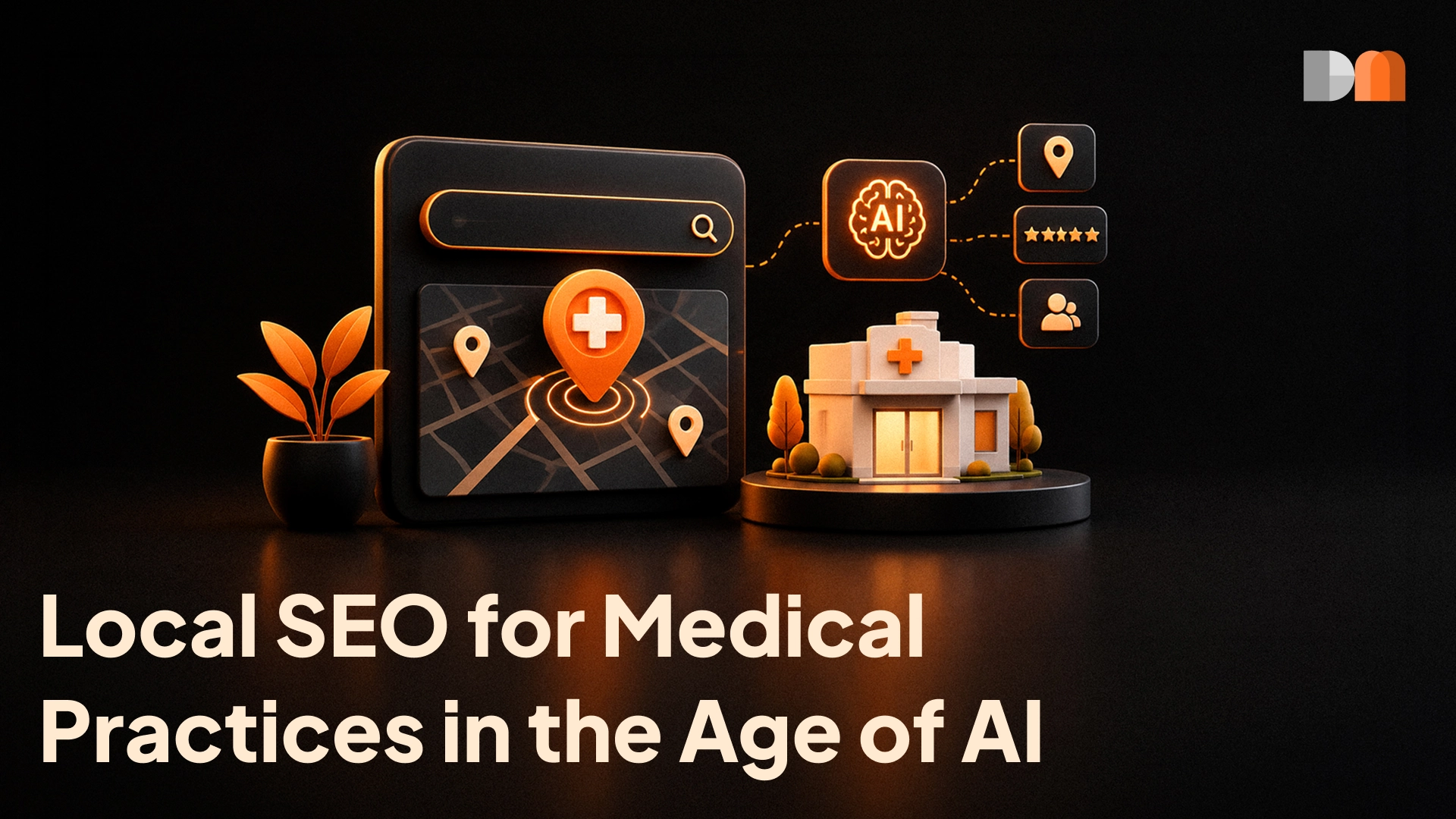
Meet patient M. It's Sunday morning, her shoulder is grumpy, and she asks her phone a question describing her symptoms. A tidy summary pops up, then a map with three nearby practices that deliver treatment for her symptoms. She taps one and schedules an appointment. This scene is why AI and local SEO for medical practices is such a hot topic. Patients get answers and recommendations in the same breath, and the practices that get named are the ones with clear, consistent information everywhere it appears.
The CDC’s National Center for Health Statistics found that 58.5% of U.S. adults used the internet to look for health or medical information in the second half of 2022. If digital marketing feels like a foreign language, take a breath. This guide covers what's changing, why healthcare local SEO still matters, and how to become the practice patient M taps on.
Some people hear "AI" and assume the old playbook of search engine optimization is gone. It isn't. Patients still want a nearby doctor, and search tools still need to figure out who's close.
What has changed is how people use the results page. Pew Research Center followed 900 U.S. adults in March 2025. When an AI summary appeared, people clicked a traditional result in 8% of visits, compared with 15% when it didn't.
Fewer clicks mean your name must be recognizable before anyone reaches your website. That's why healthcare local SEO remains the backbone of patient discovery, and our look at AI-driven lead generation shows how it fits into a bigger growth plan.
One more thing marketers rarely say out loud. A booked appointment is not the end goal. The goal is becoming the practice your community trusts, which is why AI and local SEO for medical practices work best as part of your reputation.
Local search keeps evolving, and a handful of shifts continue to shape how patients find practices online. Here’s what healthcare local SEO looks like right now:
Think of your profile as the sign above your front door. Google's own help page says complete, accurate details make a listing more likely to appear locally, and that no one can pay for a better ranking. Fill in every field. Pick accurate categories. Add real photos of your team.
AI tools cross-check. Your contact details should match word for word on your website and every listing that mentions you. If your website lists Suite 200 and your Google listing leaves it out, search tools can’t be sure which one is right.
Reviews are modern word of mouth, and Google counts them when deciding who to show. A steady rhythm beats a sudden burst, and our guide to online reputation management shows how to build one without sounding pushy.
Patients are watching. A study in the Kansas Journal of Medicine surveyed 284 patients and found that 67.2% of millennials read online reviews before choosing a physician. Reply warmly and generally, and never confirm that someone was a patient under HIPAA privacy rules.
Pages that mention the neighborhoods you serve paint a clear picture of your corner of town. A short video of your doctor explaining a common condition beats a stock photo of a smiling stranger every time. Google looks for real experience when a topic touches health.
There's no secret recipe for AI for local SEO. Strong fundamentals in search engine optimization grow the presence of your practice for the long term:
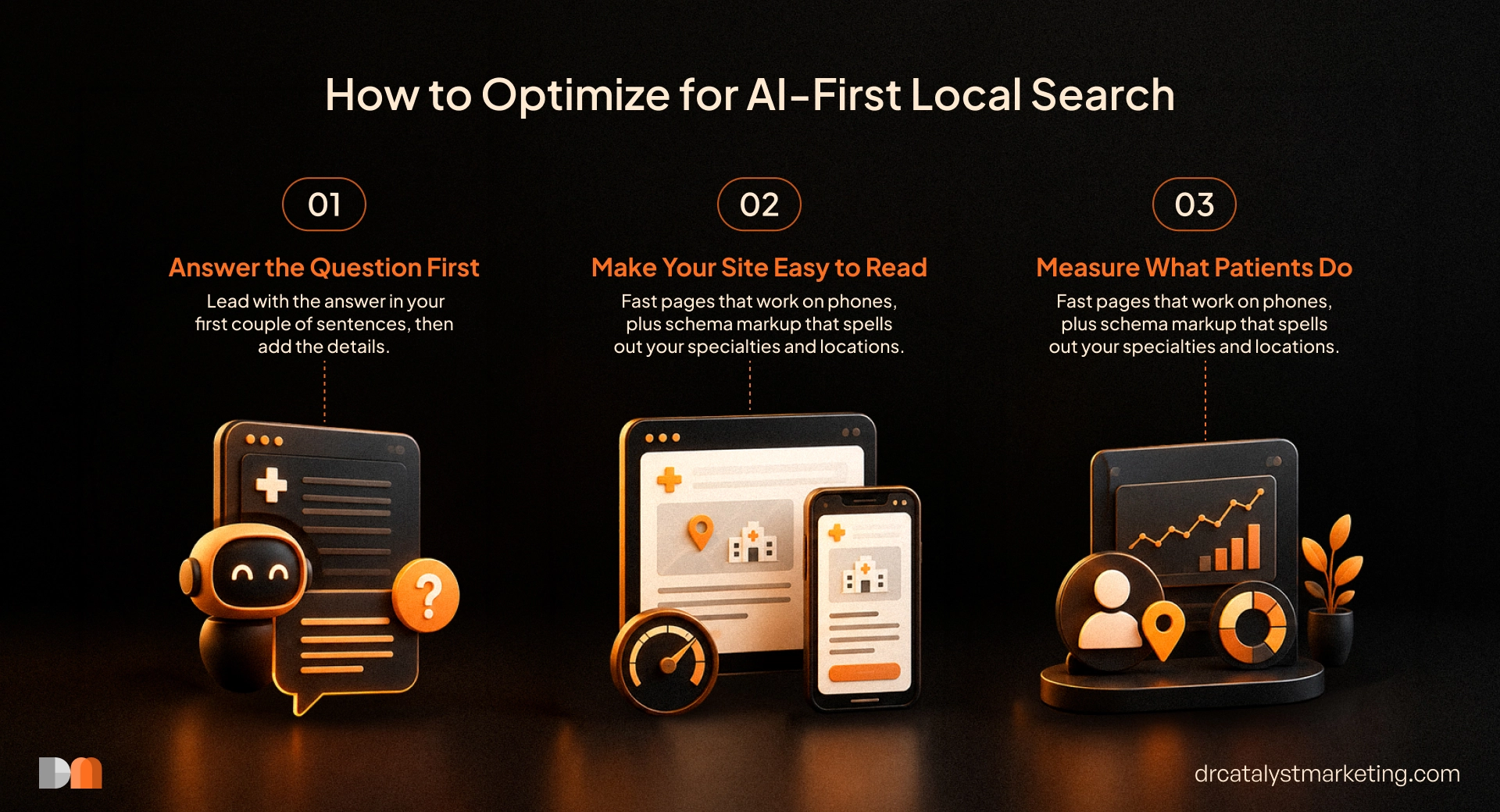
When a patient wonders how long knee replacement recovery takes, give the answer in the first couple of sentences, then add the nuance. That helps patients skim and gives AI tools a clean passage to lift. Build a few pages around the questions your front desk hears every week, and our guide to content marketing strategy shows how to plan them.
Pages should load fast and work on phones. Ask your web team about schema markup, which spells out your specialties and locations for machines. Google's documentation on AI features says a page must be indexed and eligible to appear with a snippet to show up as a supporting link. It also emphasizes helpful, people-first content.
Online rankings are nice. Phone calls are better. Track calls from your online listing. Watch direction requests. See which pages lead to forms.
AI doesn't read one page about you. It reads your whole presence. A polished website with an outdated listing is a great singer with a drummer who missed the memo. When everything plays in tune, local SEO for medical practices works for you.
The payoff goes beyond bookings. Referring doctors, job candidates, and neighbors all look you up online first, and strong healthcare local SEO helps them find the practice you really are.
DrCatalyst Marketing is a healthcare marketing agency that helps practices attract more patients while building lasting brand trust. With 12 years of experience across 40+ specialties, we've helped 200+ providers grow and maintained a 95% client retention rate. We start by listening, then build a plan around your specialty and goals. Our proven track record shows 1M+ patient leads generated across practices
AI has changed how patients ask questions, not what they want: a trustworthy practice nearby. AI and local SEO for medical practices come down to making that trust easy to see. Keep your profile accurate and your reviews flowing. Answer real questions in plain language. The next time patient M’s shoulder acts up, your practice could be the one she taps on with DrCatalyst Marketing.
Every specialty has its own patient journey. We know the difference between how someone searches for a fertility clinic and how they find urgent care.