Get a FREE marketing audit and discover what's holding your practice back from reaching its full potential.
Your potential patients are already on Instagram. They scroll through it in waiting rooms, on lunch breaks, and before bed. In a 2025 survey reported by Medical Economics, 35% of U.S. adults said they chose a physician based on the doctor’s social media presence. The question is whether they can find your practice on their feed. For many physicians, social media feels like one more thing on an already full plate. But Instagram marketing for doctors is less about chasing likes and more about something you already do every day: explaining health conditions in a way patients can understand and trust. This guide explains why Instagram matters, gives practical tips to get started, suggests what to post, and shows how to keep your practice's presence consistent and professional.
Think about how patients choose a new doctor today. Before they call, many of them look you up online. They check your website, read your reviews, and increasingly, look for you on social media. Instagram lets them see who you are before they ever walk through your door.
That first impression matters. A profile filled with helpful health tips, friendly staff photos, and short videos of you answering common questions tells a patient, "This is a practice that cares." A missing or inactive profile sends a very different message.
Instagram also fits into a bigger picture. It works best as one part of your overall digital marketing for doctors, alongside your website, local search listings, and online reviews. When these channels work together, patients find you more easily and feel more confident choosing you.
Instagram is often seen as a tool for getting new patients, and it can help with that. But for most practices, the bigger value is what it does for relationships, reputation, and patient care.
How you show up online also affects how patients relate to you. A 2024 study in Frontiers in Public Health found that patients of doctors who shared professional content on social media showed better treatment adherence, while personal-life posts had the opposite effect. In short, what you post can shape how patients engage with their care.
Aki Shishido of Circle City shared this about the Instagram content our team creates: "The posts are visually appealing, creative, and reflect seasonal topics and current events, which makes the content enjoyable to follow." That is exactly the kind of experience healthcare Instagram marketing should create.
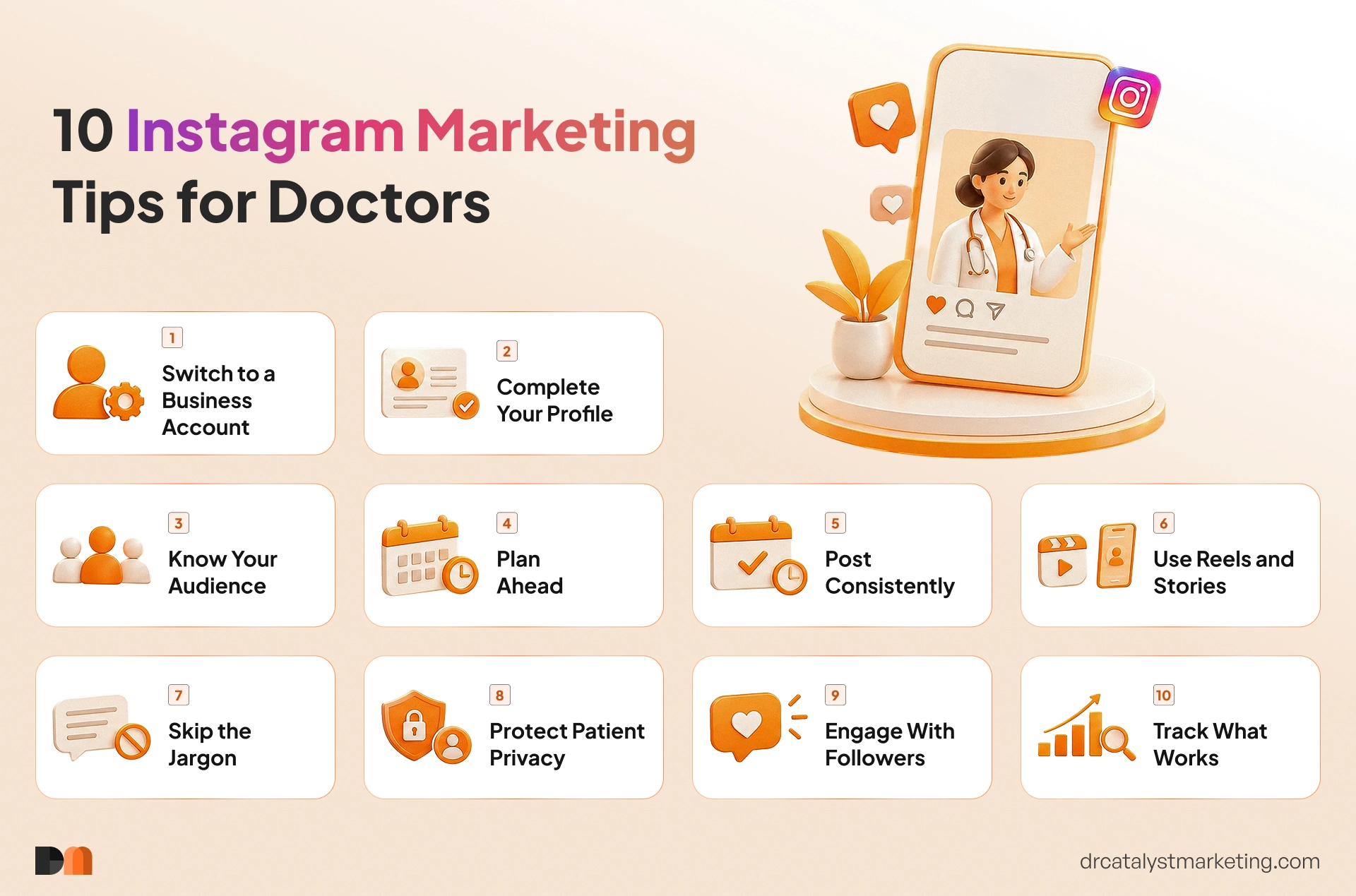
You do not need to become a social media expert overnight. These ten tips cover the basics of Instagram marketing for medical practices, from setting up your profile to building real engagement.
A business account gives you access to insights like who is viewing your content and when they are most active. It also lets you add contact buttons, your address, and a booking link right on your profile.
Use a clear headshot or practice logo, list your specialty and location, and write a short bio that tells patients how you help them. Add a link to your website or appointment page so interested patients know exactly where to go next.
A pediatric practice and a dermatology clinic should not sound the same online. Think about your typical patient, what questions they ask most, and what would genuinely help them. Then build your content around those needs.
A simple monthly calendar takes the pressure off deciding what to post each day. Plan around health awareness months, seasonal concerns, and questions your front desk hears often. Our guide to healthcare content marketing strategies explains how to turn everyday patient questions into useful content.
You do not need to post every day. Two to four quality posts a week, plus a few stories, is a realistic goal for most practices. Consistency builds familiarity, and familiarity builds trust.
Short videos are some of the most-watched content on Instagram. A 30-second reel answering a common question or a quick story showing your office getting ready for the day can feel more personal than any photo.
Write the way you would explain something to a patient in the exam room. Skip the medical terms where you can, keep captions short, and focus on one clear takeaway per post.
Never share a patient's story, photo, or identifying details without written authorization. The U.S. Department of Health and Human Services has penalized a practice that posted patient testimonials without valid HIPAA authorization. When in doubt, leave it out, and avoid giving individual medical advice in comments or messages.
Reply to comments, answer general questions, and thank people for kind words. Engagement shows patients there are real people behind the account. Positive interactions also support your broader online reputation, which our online reputation management guide covers in more detail.
Instagram's built-in insights show which posts get the most views, saves, and shares. Check them once a month, do more of what resonates, and adjust what does not.
DrCatalyst Marketing can review your current social media presence and show you where small changes can make a big difference.
Once your profile is set up, the next challenge is knowing what to post. A healthy mix of content keeps your feed interesting and useful.
Carousels or graphics explaining common conditions, prevention tips, or what to expect during a procedure.
Clear up common health misconceptions in a format patients can easily share.
Introduce your providers, nurses, and front desk staff so patients recognize familiar faces.
Show a day at your practice, new equipment, or how your team prepares for patients.
Use question stickers in Stories or go live to answer general health questions.
Flu shots, sunscreen reminders, back-to-school checkups, and national health observances.
Share these only with written consent, and focus on the experience rather than private health details.
New services, holiday hours, new providers, or community events.
As John Freiler, Founder of Premier Allergy of Texas, put it: "Their social media management has also boosted our visibility and patient engagement." The right mix of content, posted consistently, is what makes that kind of result possible.
Brand consistency simply means your practice looks, sounds, and feels the same everywhere patients find you. Your Instagram should match your website, your signage, and the experience patients have in your office. Here is what that looks like in practice:
When your brand is consistent, patients recognize you instantly and trust you more. Inconsistent branding can make a practice seem disorganized, even when the care is excellent. Your Instagram presence also supports how patients find you in search, which is why many practices work with healthcare marketing partners alongside the best medical SEO agencies to keep every channel aligned.
Running a practice leaves little time to plan posts, film videos, and reply to comments. That’s where DrCatalyst Marketing comes in. With 12+ years of experience and 200+ practices served across 40+ specialties, we understand how patients search for care, what they want to see before choosing a provider, and how to keep your content accurate and compliant. Here’s what working with us looks like:
Our clients notice the difference. As Dr. Tushar Patel of CMC Fresno shared, “The blogs, visuals, and social media content are top-notch. It’s clear that you’ve grasped exactly what I’m aiming for.” With a 95% client retention rate, we build long-term partnerships to help your practice grow its reputation, strengthen patient relationships, and stay visible in your community.
Every specialty has its own patient journey. We know the difference between how someone searches for a fertility clinic and how they find urgent care.